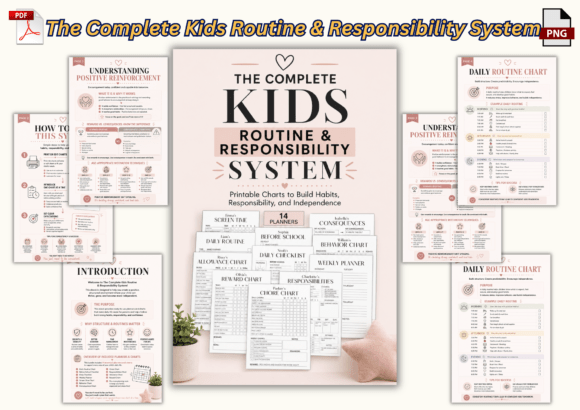
The Complete Kids Routine Responsibility System: A Practical Guide to Building Independence
Mornings in a household with young children often feel less like a gentle start to the day and more like a high-stakes tactical operation. Shoes are missing, lunches are forgotten, and the clock is ticking down to the bus arrival time. For parents, teachers, and caregivers, the gap between what we want our children to do and what they actually do can feel insurmountable. This is where The Complete Kids Routine Responsibility System Printable Charts steps in not just as a piece of paper, but as a structural tool designed to bridge that gap.
This isn’t about rigid military-style discipline; it’s about creating a predictable, stress-free environment where kids know exactly what is expected of them. By utilizing this all-in-one bundle, which includes 34 thoughtfully designed pages, families can transform chaotic mornings and bedtime battles into opportunities for building confidence, responsibility, and genuine independence.
Why Structure Feels Like Freedom
It might seem counterintuitive to suggest that rules and charts create freedom, but behavioral psychology tells us otherwise. Children thrive on predictability. When a child knows what comes next, anxiety decreases, and cooperation increases. The Complete Kids Routine Responsibili system works because it externalizes the memory load. Instead of a parent having to verbally nag their child five times to brush their teeth, put on pajamas, and pick out tomorrow’s clothes, the visual cue does the work.
Consider the typical evening routine. Without a system, the parent becomes the "bad guy" enforcing consequences. With a printable chart hanging at eye level, the chart becomes the authority. The conversation shifts from "You need to clean your room now!" to "What does your chart say you should be doing right now?" This subtle shift empowers the child to self-regulate and take ownership of their actions, reducing power struggles and fostering emotional growth.
Real-World Scenarios: Who Benefits Most?
While any family can benefit from organization, different users find unique value in this specific bundle depending on their lifestyle and challenges.
The Busy Working Parent
For parents juggling full-time careers and household management, consistency is the hardest thing to maintain. Some days you have the energy to explain every step; other days, you just need things to run smoothly. The Daily Routine Chart and Before School Checklist included in this system act as an automatic co-pilot. They ensure that essential tasks—like packing a backpack or brushing teeth—are completed without requiring constant parental intervention. This allows parents to focus on connection rather than correction during those precious limited hours before bed or after school.
Homeschoolers and Educators
Teachers and homeschooling parents often struggle with classroom management and individual student accountability. The Weekly Planner and Behavior Chart offer a scalable solution. In a classroom setting, these charts can help students track their own progress toward goals, promoting peer support and healthy competition. For homeschoolers, integrating life skills into the academic day is crucial. The Chore Chart and Responsibilities Chart seamlessly blend educational expectations with real-world life skills, teaching time management in a practical context.
Families Navigating Transitions
Whether it’s starting kindergarten, moving to a new home, or adjusting to a new sibling, transitions disrupt routines. The Custom Blank Chart feature within the 34-page bundle is particularly powerful here. It allows caregivers to tailor the system to specific transitional needs. If a child is struggling with screen time limits during a holiday break, a custom chart can be printed overnight to establish clear boundaries. This flexibility ensures the system grows with the child, remaining relevant from toddlerhood through the pre-teen years.
Deep Dive: Key Components That Drive Change
The effectiveness of The Complete Kids Routine Responsibility System lies in its comprehensive approach. It doesn’t just list tasks; it connects actions to outcomes and encourages reflection.
- The Behavior and Consequences Charts: These tools clarify expectations. By visually mapping out positive behaviors and corresponding natural consequences, children understand the cause-and-effect relationship of their choices. This supports emotional growth by helping them process why certain actions lead to specific results.
- The Allowance and Reward Charts: Financial literacy starts early. These charts provide a tangible way to teach the value of work and saving. When a child earns points or money for completing responsibilities, they learn delayed gratification and the satisfaction of earning a reward through effort.
- Reflection Planning Pages: Perhaps the most underrated aspect of this bundle is the inclusion of weekly reflection pages. Encouraging a child to look back at their week, identify what went well, and plan for improvements fosters critical thinking and self-awareness. It turns routine maintenance into a learning opportunity.
Implementation Tips for Success
Having the charts is only half the battle; how you introduce them matters. Here are some practical observations on making the system stick.
First, involve the child in the setup. Let them choose where the Daily Routine Chart will go and perhaps decorate the cover if possible. Ownership increases engagement. Second, keep it positive. Use the Reward Chart to highlight successes rather than focusing solely on failures. Celebrate small wins, like remembering to put shoes in the closet without being asked.
Third, be consistent but flexible. The first week might require gentle reminders to check the chart. Over time, the habit forms. However, remember that life happens. If a child has a bad day, use the Notes Planning Page to discuss what happened and adjust expectations for the next day. The goal is progress, not perfection.
Addressing Potential Limitations
No system is a magic wand. Parents should be aware that initial implementation requires patience. There may be resistance as the child adjusts to the new structure. Additionally, while the digital printable format is convenient and eco-friendly, it relies on access to a printer and quality paper. For some families, laminating the charts or using dry-erase markers might be necessary for durability, adding a small upfront cost.
Furthermore, the system works best when aligned with the family’s actual rhythm. If the Daily Checklist lists tasks that don’t match your household’s flow, customize it. The strength of this bundle is its adaptability. Don’t be afraid to skip sections that aren’t relevant or combine steps to simplify the process for younger children.
Building a Foundation for Life
Ultimately, The Complete Kids Routine Responsibility System is about more than clean rooms or timely homework. It’s about raising capable, confident individuals. By providing a clear framework for daily life, parents free up mental space and reduce household stress. Children, in turn, gain the skills they need to navigate the world independently.
From the Font Cover that makes the system inviting to the detailed Introduction Parent Guide that walks you through setup, every element is designed to support you. Whether you are looking to improve morning flow, address behavioral issues, or simply instill good habits, this resource offers a structured yet compassionate path forward. In a world that moves fast, giving your child the gift of routine is one of the most valuable things you can do.