Building Bridges: The Strategic Value of Structured School Communication Logs
In the evolving landscape of education, the boundary between the classroom and the home has never been more porous. For teachers, special education staff, tutors, and homeschool parents, the challenge is no longer just about delivering curriculum; it is about maintaining a consistent, transparent, and documented line of communication with families. This is where School Communication Logs transition from simple administrative tools to essential components of effective educational support systems. By standardizing how information flows between educators and guardians, these logs reduce ambiguity, ensure accountability, and foster a collaborative environment that prioritizes student success.
The modern educational ecosystem demands more than sporadic emails or fleeting phone calls. Parents today expect real-time visibility into their child’s academic and social-emotional progress. Simultaneously, educators are burdened with increasing workloads and complex documentation requirements, particularly in special education and behavioral intervention contexts. A structured log serves as the neutral ground where facts are recorded, trends are identified, and interventions are tracked. It transforms subjective observations into objective data, providing a reliable foundation for decision-making at every level.
The Evolution of Parent-Teacher Interaction
Gone are the days when parent-teacher communication was limited to annual report cards or crisis-driven meetings. The shift toward personalized learning plans, inclusive classrooms, and holistic student development has necessitated a more granular approach to tracking progress. Today’s educators manage diverse needs, including Individualized Education Programs (IEPs), behavior intervention plans (BIPs), and individualized tutoring goals. In this high-stakes environment, memory is unreliable, and informal notes can be lost. A dedicated communication log provides an auditable trail of interactions, ensuring that both parties remain aligned on goals and expectations.
This evolution reflects a broader trend in professional workflows across industries: the move toward data-driven collaboration. Just as project managers use daily stand-ups and sprint logs to keep teams synchronized, educators use communication logs to keep students and families synchronized. The relevance of this tool lies in its ability to democratize information. When parents have access to clear, consistent records of their child’s day, they can reinforce learning strategies at home effectively. Conversely, when teachers receive structured feedback from parents, they gain insights into home dynamics that may influence classroom behavior.
Design Matters: Why Format Influences Adoption
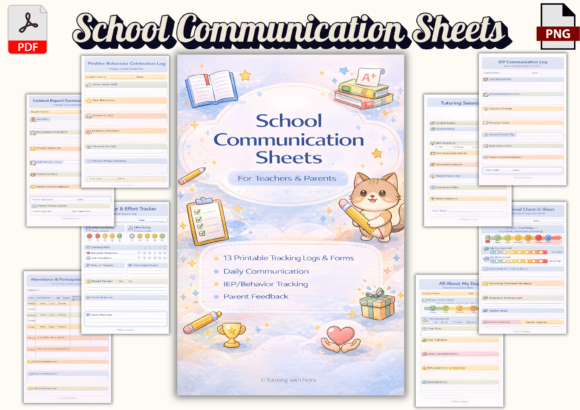
While the content of communication logs is critical, the format in which they are delivered significantly impacts their usability and adoption rate. Many digital tools exist, but they often require subscriptions, complex training, or constant internet connectivity. In contrast, physical, printable resources offer immediacy and tangibility. The School Communication Logs Parent Feedback Forms 16-Page Printable Bundle exemplifies this practical approach. Designed in a clean, professional vertical 6x9 inch format, these documents fit seamlessly into standard classroom folders, binder systems, and travel cases.
The choice of PDF and PNG file formats ensures high-resolution printing without distortion, making them suitable for both home use and professional office environments. For homeschool families, a standardized 6x9 layout mimics the structure of traditional school materials, lending a sense of routine and professionalism to the home learning environment. For private tutors, carrying a compact, printed log demonstrates preparedness and organization, building trust with clients who value transparency. The aesthetic appeal of a professionally designed cover and back blurb also matters; it signals that the educator takes their role seriously, which in turn encourages parental engagement.
Comprehensive Tracking for Diverse Educational Needs
One size does not fit all in education, and neither does one size fit all in communication. Effective logs must be adaptable to various age groups, learning styles, and specific educational goals. The comprehensive nature of a 16-page bundle allows users to select the most appropriate template for their current context. Whether managing a kindergarten class or supporting a teenager with autism, having a tailored log ensures that the right metrics are being tracked.
Early Years and Visual Learning
For early childhood education, language barriers can hinder effective communication. Young children may lack the vocabulary to articulate their day, while parents may struggle to interpret brief teacher notes. Visual versions, such as the All About My Day log, bridge this gap by allowing children to check off activities or emotions using icons. This visual component empowers young learners to participate in their own narrative, fostering autonomy and self-awareness from an early age. The Early Childhood Daily Log complements this by providing space for caregivers to note naps, meals, and social interactions, offering a holistic view of the child’s well-being.
Special Education and IEP Compliance
For special education professionals, documentation is not just helpful; it is often legally required. IEP Communication Logs provide a structured space to track progress toward specific goals, record accommodations provided, and note any deviations from the plan. These logs serve as vital evidence during IEP meetings, helping to justify continued services or modifications. Similarly, Behavior Effort Trackers and Incident Report Communication Sheets allow staff to document behavioral patterns objectively. By focusing on frequency, intensity, and triggers rather than subjective judgments, these logs help identify underlying causes of behavior and measure the effectiveness of interventions over time.
Tutoring and Academic Accountability
Private tutors and homeschool parents face unique challenges in demonstrating value and progress to stakeholders. The Tutoring Session Log and Homework Study Accountability Log address this by breaking down sessions into measurable components. Tutors can record topics covered, assignments completed, and areas requiring further review. Parents can sign off on homework completion, creating a shared responsibility model. This transparency builds confidence in the tutoring relationship and ensures that study time is productive and focused.
Integrating Social-Emotional Learning (SEL)
Modern education places a heavy emphasis on social-emotional learning (SEL). Recognizing that academic success is intertwined with emotional well-being, effective communication logs now include spaces for emotional check-ins. The Social-Emotional Check-In Sheet allows students and parents to discuss feelings, stressors, and coping strategies. This regular reflection helps normalize conversations about mental health and provides early warning signs of anxiety or burnout. By integrating SEL into daily logs, educators treat the whole child, acknowledging that a student’s mood and mindset are just as important as their math scores.
Feedback Loops and Continuous Improvement
A one-way stream of information is insufficient for long-term partnership. The inclusion of a Parent Response Feedback Sheet creates a closed loop, inviting parents to share their perspective on the communication itself. Are the logs clear? Do they meet their needs? Is there additional information they wish to provide? This feedback mechanism allows educators to refine their approach, ensuring that the communication process remains responsive and relevant. It shifts the dynamic from transactional reporting to collaborative problem-solving.
Furthermore, tools like the Weekly Student Reflection encourage metacognition. Students are prompted to think about what they learned, what challenged them, and what they hope to achieve next week. This habit of reflection cultivates independence and ownership of learning. When combined with parental input, it creates a powerful triad of support centered around the student’s growth.
Practical Implementation Strategies
To maximize the utility of School Communication Logs, consistency is key. Educators should establish a routine for updating and distributing logs, whether daily or weekly. Digital backups, such as scanning completed pages, can preserve records for future reference. For homeschool families, integrating logs into the daily schedule ensures they become a natural part of the routine rather than an added burden. For classroom teachers, delegating log management to older students can teach responsibility while freeing up teacher time.
It is also important to train parents on how to use these logs effectively. Providing a brief guide or holding a workshop at the beginning of the year can clarify expectations. Emphasize that the log is a two-way street: parents are encouraged to write notes, ask questions, and share successes observed at home. When parents feel heard and valued, they are more likely to engage actively in their child’s education.
Conclusion
The School Communication Logs Parent Feedback Forms 16-Page Printable Bundle represents more than just a collection of templates; it is a toolkit for building stronger educational partnerships. By providing structured, professional, and versatile resources, it empowers teachers, tutors, and parents to communicate with clarity and purpose. In an era where connection is paramount, these logs serve as the foundation for trust, transparency, and tangible progress. Whether used in a bustling classroom, a quiet tutoring session, or a home learning center, they ensure that no detail is overlooked and no voice is unheard. Investing in clear communication is ultimately an investment in the student’s future, creating an environment where everyone involved is working together toward the same goal.